Can Research Build Your Business Case for Fleet Safety Controls?
Fleet safety controls may offer benefits before and after a crash, but their value depends on how they are selected and used. Research highlights technologies and practices that organizations may consider when evaluating the potential return on their investment.
October 2, 2026

Fleet safety controls can be a valuable investment for organizations, providing tools to monitor driver behavior, support follow-up coaching, and potentially reduce claims costs by helping document accidents. TechCelerate, a Federal Motor Carrier Safety Administration (FMCSA) program designed to accelerate the adoption of advanced driver assistance systems (ADAS) in the commercial motor vehicle (CMV) industry, offers insight into potential financial benefits.
“TechCelerate’s guide concludes that ADAS can reduce commercial vehicle crashes and may produce a financial return through lower crash costs, safer driving, improved operations, and selected fuel savings,” said Vik Ramaswamy, Director – Risk Control at Safety National. “Actual benefits will depend on an organization’s loss history, mileage, deductible, equipment mix, implementation costs, and assumed reduction in crashes, but the guide provides a return-on-investment model that an organization may consider when evaluating fleet safety technology.”
Here, we review TechCelerate’s findings and how companies might get the most from their technology.
Return-on-Investment Estimate for Selected Fleet Safety Controls
In TechCelerate’s example, a 20-truck fleet operating 1.2 million miles annually invested approximately $54,491 over five years and realized an estimated $277,150 in gross benefits. That example equates to a net benefit of $222,659, a benefit-cost ratio of $5.09 for every $1 invested, and a 12-month payback period. Upon full implementation, the model projects a 52% reduction in related crashes. Because the model does not include costs for installation, training, or maintenance and actual results may vary materially, fleets should treat the results as an illustration rather than a forecast or universal benchmark. TechCelerate’s guide also combines the potential benefits of several technologies, so the stated return should not be attributed to a single ADAS feature.
Controls May Deliver More Value When Paired with Driver Coaching
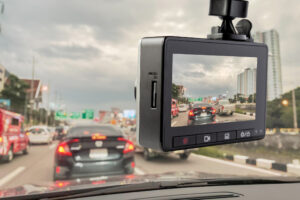
As part of a broader fleet safety strategy, many organizations have adopted in-cab cameras. Research on driver-facing cameras indicates that this technology may be most effective when used as part of a behavior-management program. In a Centers for Disease Control and Prevention (CDC)/National Institute for Occupational Safety and Health (NIOSH) field study of 315 vehicles, drivers who received in-cab warnings and supervisor coaching experienced a significantly greater reduction in risky-driving events than drivers who received warnings alone or no intervention.
A FMCSA field test produced mixed crash results across two fleets. However, the fleet that coached drivers on approximately 91% of eligible events within one week achieved the clearest sustained decline in risky events. A separate NHTSA study of 102 drivers who traveled 2.4 million miles found lower measured drowsiness with camera-based warnings, although it did not identify a statistically significant reduction in crashes or near-crashes.
Active Controls May Support Crash Prevention
Road-facing technology also requires a clear distinction between passive recording and active intervention. Independent U.S. research has not shown that a passive dashcam prevents crashes on its own. However, an Insurance Institute for Highway Safety (IIHS) study associated forward collision warning with 22% fewer police-reportable crashes overall and 44% fewer rear-end crashes. Automatic emergency braking was associated with reductions of 12% overall and 41% for rear-end crashes. These findings may support consideration of active systems that detect hazards and warn or intervene, rather than treating recording alone as a proven preventive control.
Combining Technology, Policy, and Coaching
A fleet seeking both safety and claims benefits may first want to consider an event-triggered, dual-facing system supported by a written policy, prompt event review, and consistent coaching. A passive road-facing camera can still provide valuable evidence after a loss, but it should not be presented as a proven crash-prevention device. A business case for executives should be based on the fleet’s own loss experience and operating costs.
Organizations should evaluate fleet camera and ADAS programs considering applicable laws and regulations, workforce policies, privacy and notice requirements, data-security practices, retention standards, and the capabilities and limitations of the selected technology.

Building Better Workers’ Compensation Outcomes Through Trust and Accountability

Can Research Build Your Business Case for Fleet Safety Controls?

5 Reasons Complex Claims Require a New Management Approach

Strong on Paper, Weak in Practice: The Gap in Risk Transfer

Avoiding Common Mistakes in Blood-Contaminated Waste Disposal

Why Higher Wages May Signal Greater Medical Utilization in Injured Workers

Rethinking Access to Care for Rural Injured Workers

Managing the Complexities of Cancer, Heart, and Lung Claims

The Role of Letters of Protection in Liability Claims

How Rapid Data Center Growth Can Magnify Construction Risks

The Silent Damage of Workplace Hearing Loss

5 Lessons Learned from WCI 2026
7 Tips for Managing Driving Incident Videos

Police Pursuits and the Challenge of Risk Tradeoffs

8 Key Public Entity Risks and Tactics to Mitigate Them

What Historical Data Does Not Tell Us About Emerging Liabilities

MSD Prevention Technology: Turning Worker Feedback into Safer Workplaces

5 Tips for Building Your School District’s Event Safety Plan

Is Peripheral Nerve Pain Delaying Your Injured Worker’s Recovery?

Protecting Against OSHA’s Top 10 Safety Citations

3 Hazards Facing First Responders During Home-to-Hospital Transport

How Does Your Industry Shape the Real Cost of Cybercrime?

What Makes a Self-Insured Group a Good Risk?

How Mental Health Is Reshaping Workers’ Compensation