
3 Hazards Facing First Responders During Home-to-Hospital Transport
Every emergency scene is different, and moving a patient safely can be challenging for first responders. A rushed or poorly coordinated lift can worsen the patient’s injury and put emergency responders at risk.
July 27, 2026
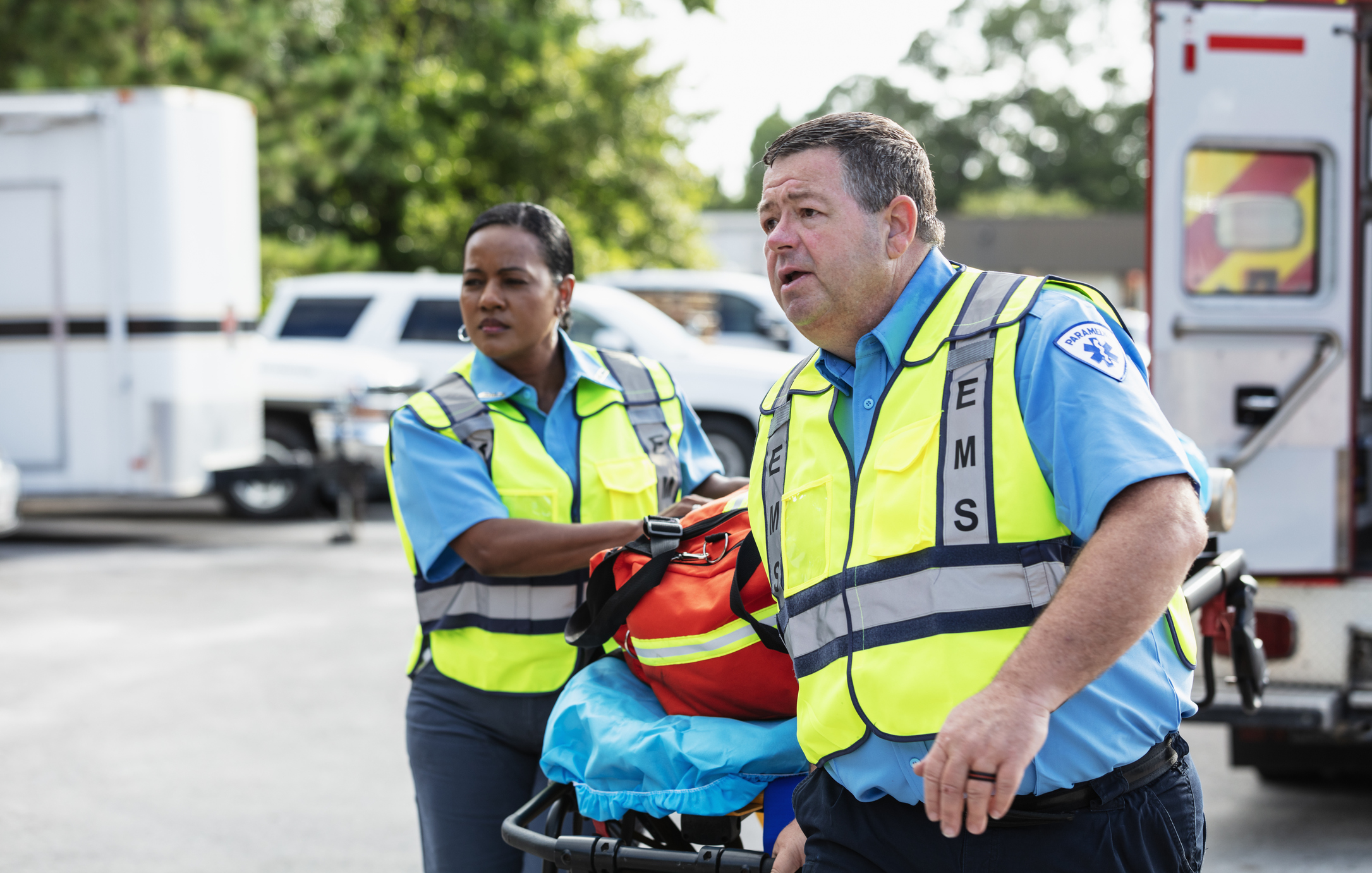
Emergency medical service (EMS) workers respond to more than 40 million calls annually, with more than half related to residential emergencies. Often, these home environments are unpredictable, but patients must still be assessed, moved, and transported quickly to necessary care facilities. Unlike controlled healthcare settings, private residences may have hazards like narrow hallways, clutter, poor lighting, and limited room for equipment. These conditions create risks for both the patient and the emergency medical services team.
“Manual patient handling is a common source of musculoskeletal strain in first responders who may need to lift a patient from the floor, a bed, or a chair, or carry a patient down the stairs, move a patient through a tight doorway, or load a stretcher into an ambulance,” said Alleen Wilson, Senior Risk Control Manager at Safety National. “These tasks can place significant stress on the body, especially when responders are working under pressure in awkward postures with limited space.”
Here, we break down several of the hazards that first responders face in a patient’s home environment.
1. Environmental and Access Challenges
Patient homes are not designed like healthcare facilities. Narrow staircases, tight bathrooms, and low beds can restrict movement and make access difficult for first responders attempting to deliver a stretcher to an injured person. Loose rugs, clutter, poor lighting, and uneven flooring can increase the risk of slips, trips, and falls. Outside the home, icy walkways or limited driveway access may create additional challenges during patient transport.
Exposures to harmful substances can also result in emergency responder injury. This could involve bodily secretions or needlesticks. Even with personal protective equipment (PPE), these injuries can require lab work to ensure an EMS worker’s safety and potential treatment for any harmful illness exposure.
2. Patient Condition and Physical Demands
A patient’s state of consciousness can vary from the time an ambulance is called to the point that first responders arrive. If the injured person is awake, they may be confused or combative, which can make transportation particularly challenging for emergency responders. While overexertions and bodily reactions are the most common injuries among EMS workers, violence is the second leading cause.
Frailty, especially among older adults, and bariatric care needs can further complicate transport. Injuries such as fractures, stroke symptoms, respiratory distress, weakness, or pain can also intensify an already delicate emergency. Responders must also protect any medical devices during transport, like oxygen tanks, ventilators, and cardiac monitors. When a patient is incapacitated, the team may need additional personnel, specialized equipment, or a different removal route.
3. Urgency, Communication, and Injury Risk
Lifting and repositioning patients can require twisting, reaching, bending, and carrying weight away from the body. The risk is especially high when responders must move someone from the floor, carry them down a flight of stairs, transfer them between surfaces, or load them into an ambulance. In fact, a recent study found that the overall rate of injury for EMS workers was four times higher than other U.S. workers, with the rate of back injuries over seven times higher.
The pressure to move quickly, and sometimes in crowded rooms full of family members, can make coordination more difficult. In a panicked situation, distressed families may also misremember important medical information for their injured family member or provide conflicting stories related to the emergency call. Family interference or distrust can lead to unclear commands, which can result in sudden movement, uneven lifting, patient slips, or responder injury.

5 Major Hazards for Heavy Truck Drivers

Technology Meets Human Expertise at National Comp 2026
3 Moments That Matter in Workplace Parking Lot Safety

Top Trends Identified in WCRI’s Examination of Current Workers’ Compensation Claims

Building Better Workers’ Compensation Outcomes Through Trust and Accountability

Can Research Build Your Business Case for Fleet Safety Controls?

5 Reasons Complex Claims Require a New Management Approach

Strong on Paper, Weak in Practice: The Gap in Risk Transfer
Avoiding Common Mistakes in Blood-Contaminated Waste Disposal
Why Higher Wages May Signal Greater Medical Utilization in Injured Workers
Rethinking Access to Care for Rural Injured Workers

Managing the Complexities of Cancer, Heart, and Lung Claims
The Role of Letters of Protection in Liability Claims

How Rapid Data Center Growth Can Magnify Construction Risks
The Silent Damage of Workplace Hearing Loss

5 Lessons Learned from WCI 2026
7 Tips for Managing Driving Incident Videos
Police Pursuits and the Challenge of Risk Tradeoffs

8 Key Public Entity Risks and Tactics to Mitigate Them

What Historical Data Does Not Tell Us About Emerging Liabilities

MSD Prevention Technology: Turning Worker Feedback into Safer Workplaces

5 Tips for Building Your School District’s Event Safety Plan
Is Peripheral Nerve Pain Delaying Your Injured Worker’s Recovery?

Protecting Against OSHA’s Top 10 Safety Citations