Lessons from Losses: When Familiar Firefighting Tactics Create New Risks
Fire departments face emerging concerns in addition to long-recognized hazards. A recent NIOSH investigation of a silo explosion demonstrates why pre-incident planning, hazard identification, and tactics matched to the equipment remain essential.
October 30, 2026
The National Institute for Occupational Safety and Health Fire Fighter Fatality Investigation and Prevention Program (NIOSH FFFIPP) conducts free, independent investigations of selected firefighters line-of-duty deaths and serious injuries. Participation is voluntary, and the program does not enforce safety standards or determine fault. Its purpose is to identify contributing factors and recommend actions that may prevent similar deaths and injuries.
Since the program began, FFFIPP has investigated approximately 40% of firefighter deaths in the U.S., including more than 750 line-of-duty deaths. Fire department representatives, fire service organizations, and state fire marshals may request an investigation. NIOSH may also contact a department about conducting one.
“These reports give fire departments an opportunity to learn from serious incidents without placing blame on the people or departments involved,” said Sara Gibson, Senior Risk Control Manager at Safety National. “Departments can use the findings to evaluate their training, procedures, pre-incident planning, and command practices before a similar event occurs in their jurisdiction.”
The U.S. Fire Administration provisionally counted 81 on-duty firefighter deaths in 2025. Cardiovascular events accounted for 48 of those deaths. These figures reinforce the need to address both emergency-scene hazards and the medical risks firefighters face throughout their careers.
A Fatal Silo Explosion in Maine
An FFFIPP report published in August 2026 examined a fire and explosion at a Maine lumber mill that occurred earlier this year. Two volunteer firefighters died, and 11 volunteer firefighters and two emergency medical services (EMS) providers were critically injured.
The incident involved an oxygen-limiting silo, which was a sealed structure designed to restrict airflow that contained wood shavings and sawdust. According to the NIOSH report, facility employees and responding firefighters did not know the structure was an oxygen-limiting silo or that its contents presented a combustible-dust hazard.
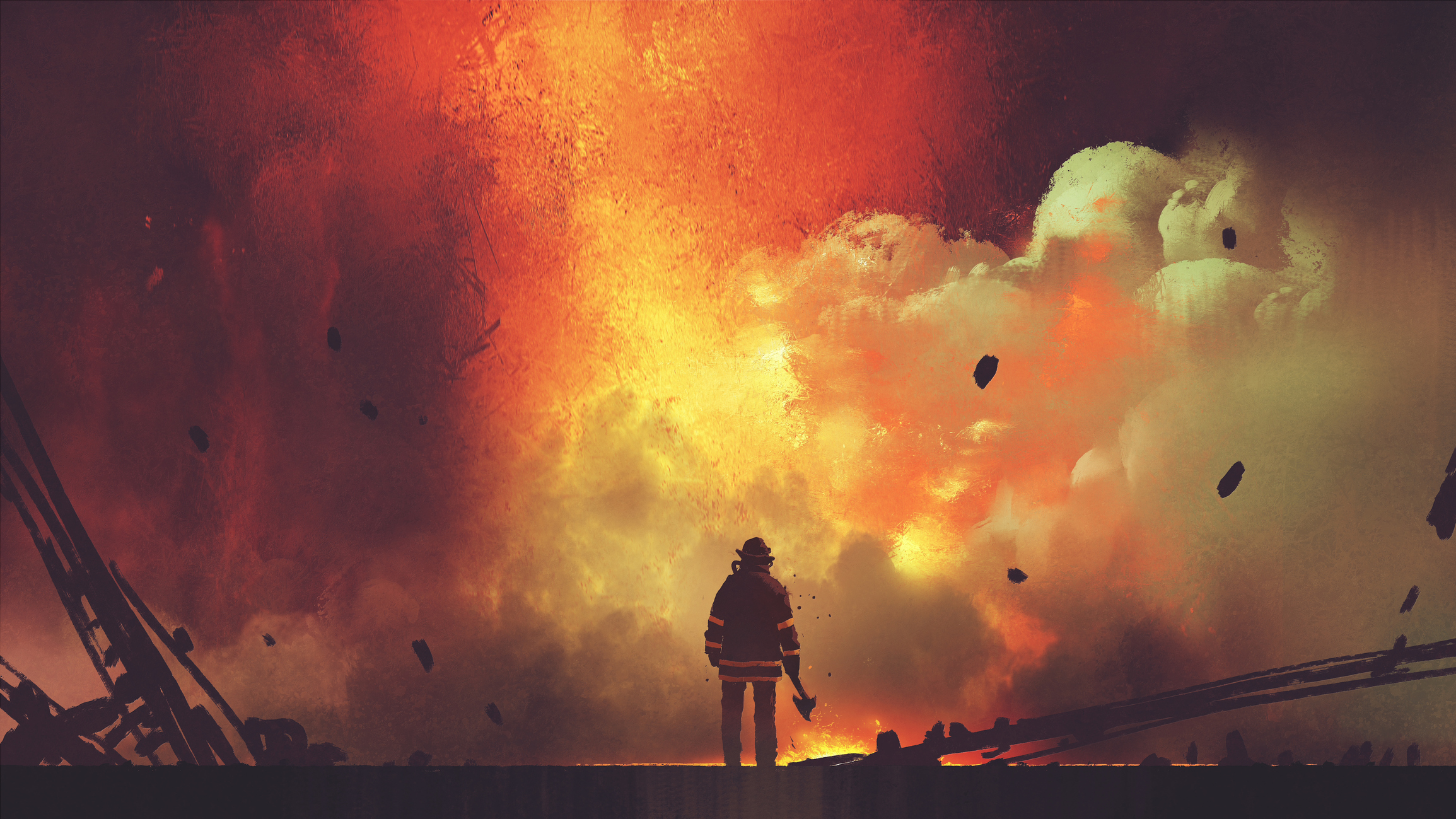
Firefighters directed water through an opening at the base of the silo. NIOSH identified water application as a likely contributing factor to the explosion. The resulting explosion launched the silo into the air and produced a large plume of fire and a powerful pressure wave.
Why This Incident Matters
The responding departments had previously fought fires in another silo at the facility. Those fires involved a conventional silo, and firefighters had successfully used water during the response. At the fatal incident, similar tactics were used on an oxygen-limiting silo with very different characteristics.
This difference indicates one of the report’s most important lessons. A tactic that worked during an earlier incident may become dangerous when the equipment’s construction, contents, or operating conditions change. In an oxygen-limiting silo, introducing water or foam can force air into the enclosure, disturb combustible dust, and create conditions that may lead to an explosion.
NIOSH also noted that silo fires may burn slowly for days, weeks, or even months. That can give responders time to establish isolation zones, consult facility and manufacturer representatives, identify the silo type and contents, and develop a deliberate suppression strategy.
Actions for Fire Departments
Drawing on NIOSH’s recommendations, fire departments should consider the following practices as part of their training and pre-incident planning:
- Identify high-hazard occupancies. Include lumber mills, grain-handling facilities, agricultural operations, and other properties with silos or combustible-dust processes in the department’s pre-incident planning program.
- Document critical equipment information. A pre-incident plan should identify the silo type, construction, contents, access points, utility controls, installed suppression systems, and manufacturer emergency procedures.
- Train personnel on silo hazards. Officers and firefighters should understand the differences between conventional and oxygen-limiting silos. NIOSH advises responders never to direct water or foam into an oxygen-limiting silo.
- Include facility representatives in unified command. Under this coordinated command structure, facility personnel can provide information about equipment, contents, shutdown procedures, and previous incidents. Departments should identify these contacts before an emergency.
- Strengthen accountability and scene control. Use a system to track personnel, establish appropriate isolation zones, and limit the number of responders positioned near a silo or other potential explosion hazard.
- Review previous successes carefully. Similar-looking equipment may operate differently. Confirm the equipment type and hazard before relying on tactics that worked during a previous incident.
This article summarizes selected NIOSH findings for general educational purposes and is not a complete emergency-response protocol or a substitute for incident-specific assessment, training, or applicable requirements.
Lessons from Losses: When Familiar Firefighting Tactics Create New Risks

3D Printing and Bioprinting Applications in an Injured Worker’s Treatment

Understanding the Cyber Risks of Third-Party Vendors

4 Questions to Ask When Evaluating Your Carrier Relationship

5 Major Hazards for Heavy Truck Drivers

Technology Meets Human Expertise at National Comp 2026
3 Moments That Matter in Workplace Parking Lot Safety

Top Trends Identified in WCRI’s Examination of Current Workers’ Compensation Claims

Building Better Workers’ Compensation Outcomes Through Trust and Accountability

Can Research Build Your Business Case for Fleet Safety Controls?

5 Reasons Complex Claims Require a New Management Approach

Strong on Paper, Weak in Practice: The Gap in Risk Transfer
Avoiding Common Mistakes in Blood-Contaminated Waste Disposal

Why Higher Wages May Signal Greater Medical Utilization in Injured Workers
Rethinking Access to Care for Rural Injured Workers

Managing the Complexities of Cancer, Heart, and Lung Claims

The Role of Letters of Protection in Liability Claims

How Rapid Data Center Growth Can Magnify Construction Risks

The Silent Damage of Workplace Hearing Loss

5 Lessons Learned from WCI 2026

7 Tips for Managing Driving Incident Videos

Police Pursuits and the Challenge of Risk Tradeoffs

8 Key Public Entity Risks and Tactics to Mitigate Them

What Historical Data Does Not Tell Us About Emerging Liabilities